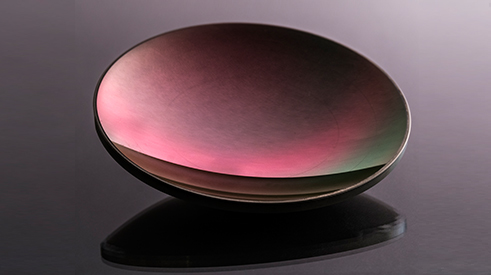
IR optics are the lenses, windows, mirrors, and assemblies that focus and transmit infrared light, the invisible heat-band radiation that ordinary glass blocks. They are the eyes of every thermal imaging system, from handheld inspection cameras and automotive night vision to industrial sensors and CO₂ laser systems. Because infrared behaves differently from visible light, IR optics require specialized materials, precise manufacturing, and coatings tuned to the target waveband.
This guide explains what IR optics are, the materials and spectral bands involved, where they are used, and how high-precision IR optics are actually made. At Holding Cimcoop, we manufacture custom IR optics end-to-end.
Key takeaway: IR optics work in the infrared spectrum, where materials like germanium, silicon, zinc selenide, and chalcogenide glass replace ordinary optical glass. Choosing the right material and spectral band, then manufacturing to tight tolerances, determines the image quality and durability of any infrared system.
What Are IR Optics?
IR optics are optical components designed to transmit, focus, or reflect infrared radiation rather than visible light. Infrared sits just beyond the red end of the visible spectrum and is emitted by anything that generates heat, which is why IR optics are central to thermal imaging.
The critical difference from conventional optics is the material. Ordinary optical glass does not transmit infrared well, so IR optics use specialized substrates such as germanium, silicon, zinc selenide, zinc sulfide, and chalcogenide glasses. Each material has a transmission window, a refractive index, and mechanical properties suited to particular infrared bands and environments.
The Infrared Spectral Bands Explained
Infrared is divided into bands, and IR optics are engineered for a specific one:
- NIR (Near-Infrared), ~0.75 to 1.4 µm: close to the visible spectrum, used in machine vision and sensing.
- SWIR (Short-Wave Infrared), ~1.4 to 3 µm: moisture detection, sorting, and imaging through some obscurants.
- MWIR (Mid-Wave Infrared), 3 to 5 µm: high-temperature targets, gas detection, and high-performance industrial and research imaging, usually with cooled detectors.
- LWIR (Long-Wave Infrared), 8 to 14 µm: the dominant band for thermal imaging and industrial inspection, usually with uncooled detectors.
LWIR and MWIR are the prominent bands in the infrared market, with LWIR alone expected to account for roughly 37% of the infrared imaging market in 2026 (Fortune Business Insights).
IR Optics Materials Compared
Material selection is the heart of IR optics design. The table below compares the most common infrared materials and where each fits.
| Material | Transmission Range | Best For | Notes |
| Germanium (Ge) | ~2 to 14 µm | MWIR and LWIR thermal imaging, FLIR | High refractive index, opaque in visible, dense |
| Silicon (Si) | ~1.2 to 8 µm (particularly useful in MWIR) | MWIR imaging, CO₂ laser components, lens blanks | Lower density, lightweight, cost-effective |
| Zinc Selenide (ZnSe) | ~0.5 to 22 µm | CO₂ laser optics, high-accuracy IR | Excellent transmission, low absorption, softer |
| Zinc Sulfide (ZnS) | ~0.4 to 12 µm | Windows and domes in harsh environments | High mechanical strength and durability |
| Chalcogenide glass | ~2 to 20 µm | LWIR imaging, moldable optics | Tailorable, athermal designs, cost-scalable |
Bottom line: Germanium and silicon are the workhorses of MWIR and LWIR thermal imaging. ZnSe excels in laser optics, ZnS in rugged windows and domes, and chalcogenide glass in cost-scalable LWIR imaging. The right choice balances spectral band, environment, weight, and cost.
Types of IR Optics
A complete infrared system uses several kinds of IR optics:
- IR lenses: spherical, aspherical, diffractive, and freeform lenses that focus infrared onto a detector. Diffractive and aspheric surfaces reduce element count and improve performance.
- IR windows: flat components that protect a sensor while transmitting the target band, often in silicon or germanium.
- IR mirrors: reflective components for folding or steering infrared beams.
- Lens blanks: pre-generated silicon and germanium blanks that feed downstream lens production.
- Optomechanical assemblies: complete, ready-to-install modules combining IR optics with precision mechanics.
Applications of IR Optics
IR optics enable a wide and growing range of applications:
- Thermal imaging and inspection: electrical, mechanical, and building inspection in predictive maintenance programs.
- Commercial security and safety: perimeter monitoring, fire detection, and safety.
- Automotive: ADAS night vision and pedestrian detection.
- Industrial lasers: silicon and ZnSe optics for CO₂ laser cutting and processing.
- Medical: thermal diagnostics and specialized imaging.
- Machine vision: temperature-critical quality control and sorting.
Demand is strong: the infrared lens market is valued at roughly USD 931 million in 2026 and is forecast to reach about USD 2.5 billion by 2035, a CAGR near 11.7%, driven by automotive, industrial monitoring, medical, and commercial security and safety applications (Global Growth Insights).
How IR Optics Are Manufactured
Producing high-performance IR optics demands processes matched to infrared materials, which are often crystalline, brittle, or soft. Key manufacturing steps include:
- Crystal growth: growing silicon and germanium crystals to feed lens-blank production, the start of a truly end-to-end process.
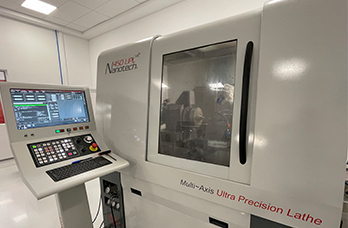
- Single point diamond turning (SPDT): cutting spherical, aspheric, diffractive, and freeform surfaces directly, a technique especially suited to IR materials.
- CNC grinding and polishing: generating and finishing spherical and flat surfaces on silicon, germanium, and other substrates.
- CNC centering: edging lenses up to 200 mm to tolerances of ±0.01 mm.
- Coating: applying anti-reflective coatings optimized for the target MWIR or LWIR band to maximize transmission.
- Metrology: verifying every specification, with documentation including certificates of compliance, interferograms, and coating curves.
In high-precision IR optics, the ability to measure is just as important as the ability to produce.
Why Manufacturing Precision Defines IR Optics Performance
Two IR lenses made from the same germanium can perform very differently. Surface figure, centering accuracy, surface quality, and coating precision set the ceiling on image sharpness, thermal contrast, and durability. This is why vertical integration matters: a single manufacturer controls the process.
Cimcoop manufactures custom IR optics using this exact model. With 30+ years of experience, ultra-precision diamond turning capabilities, and ISO 9001 certification, we supply IR lenses, windows, and assemblies to OEMs building thermal imaging, machine vision, laser, medical, and industrial systems. No customer is too demanding.
Frequently Asked Questions About IR Optics
What are IR optics?
IR optics are optical components, including lenses, windows, mirrors, and assemblies, designed to transmit, focus, or reflect infrared radiation rather than visible light. They use specialized materials such as germanium and silicon because ordinary optical glass does not transmit infrared well.
What materials are used for IR optics?
The most common IR optics materials are germanium and silicon for MWIR and LWIR thermal imaging, zinc selenide for CO₂ laser optics, zinc sulfide for rugged windows and domes, and chalcogenide glass for cost-scalable LWIR imaging.
What is the difference between MWIR and LWIR optics?
MWIR (Mid-Wave Infrared, 3 to 5 µm) optics suit high-temperature targets, gas detection, and high-performance industrial and research imaging, usually with cooled detectors. LWIR (Long-Wave Infrared, 8 to 14 µm) optics dominate thermal imaging and industrial inspection, usually with uncooled detectors.
Why can’t IR optics use ordinary glass?
Ordinary optical glass absorbs most infrared radiation, so it cannot transmit the infrared wavelengths that infrared systems rely on. IR optics instead use materials like germanium, silicon, zinc selenide, and chalcogenide glass, which have strong transmission in the infrared.
What is germanium used for in IR optics?
Germanium is the most widely used infrared material for 2 to 14 µm thermal imaging. Its high refractive index and excellent IR transmission make it ideal for FLIR and thermal camera lenses, while its opacity in the visible spectrum suits infrared-only systems.
How are custom IR optics manufactured?
Custom IR optics are produced using single-point diamond turning, CNC grinding and polishing, and CNC centering on infrared materials, followed by anti-reflective coating and metrology. Vertically integrated manufacturers also grow their own silicon and germanium crystals for full traceability.
What applications use IR optics?
IR optics are used in thermal imaging and industrial inspection, commercial security and safety systems, automotive night vision, CO₂ industrial lasers, medical diagnostics, and machine vision.
Need Custom IR Optics?
Whether you need germanium or silicon IR lenses, infrared windows, mirrors, or complete optomechanical assemblies for the MWIR or LWIR band, Cimcoop manufactures to your exact specifications, from crystal growth through final coating, with full traceability and ISO 9001 certification. We would be happy to discuss your requirements today.
Sources
- Infrared optical materials (Ge, Si, ZnSe, ZnS, chalcogenide): MoveOn, Crystran
- Infrared lens market size and growth: Global Growth Insights
- Infrared imaging market and LWIR share: Fortune Business Insights
- Company IR processes, materials, tolerances, certifications: Cimcoop (Capabilities, Products)